Not All Organic Fruit Is Created Equal: The Real Reason Your Strawberries Keep Letting You Down
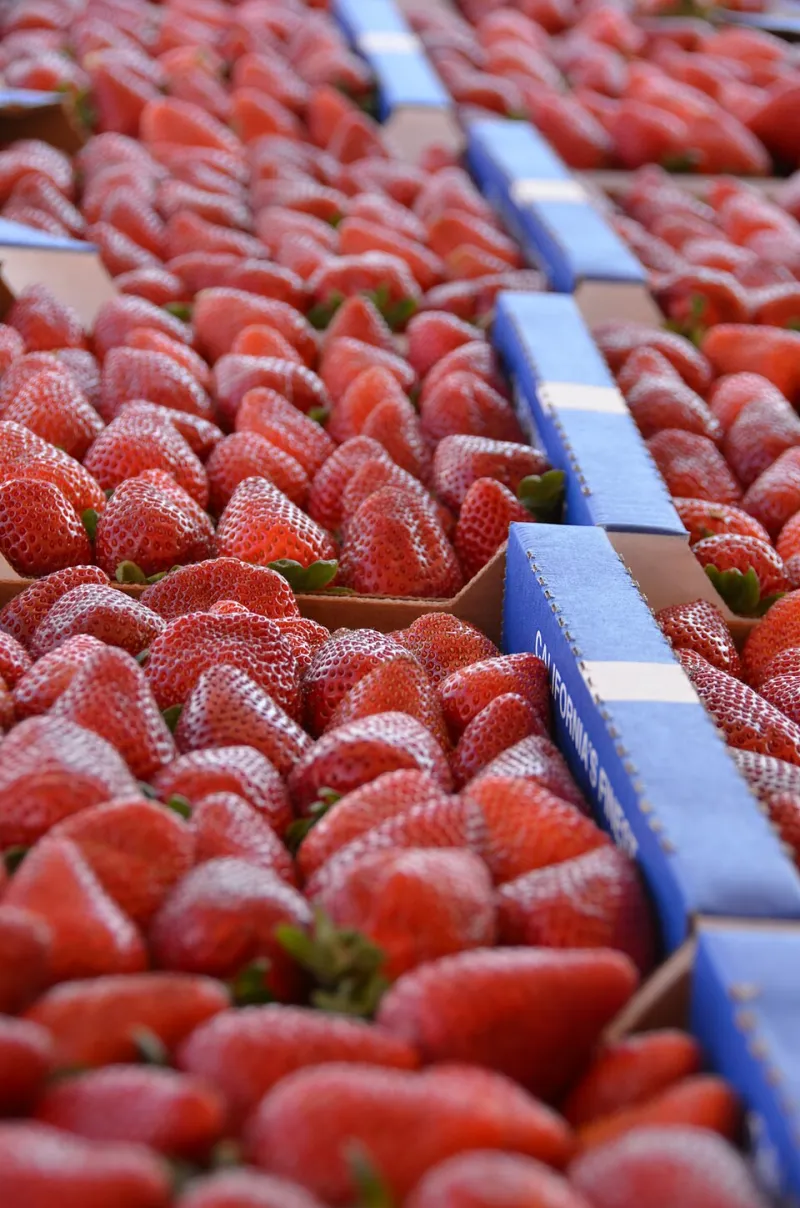
Photo: Rob Bertholf, CC BY 3.0, via Wikimedia Commons
Let's be honest about something. You've stood in the produce aisle, paid the organic premium, brought those gorgeous ruby-red strawberries home — and then taken a bite that tasted like slightly sweet water. Meanwhile, that organic Honeycrisp apple you grabbed almost as an afterthought? Genuinely delicious. Crisp, complex, worth every cent.
This isn't random. There are real, structural reasons why certain organic fruits reliably punch above their weight while others consistently disappoint, and once you understand them, you'll shop completely differently.
The Ripeness Window Problem
Here's the thing about strawberries that nobody puts on the label: they have almost no ripeness window. An apple can be picked slightly early, stored under controlled conditions, and still develop reasonable flavor over time. A strawberry picked before peak ripeness is basically done. The sugars, the aromatic compounds, the texture — all of that has to develop on the plant itself. Once it's off the vine, the clock isn't just ticking. It's already run out.
Apples, pears, and even some stone fruits like peaches have what food scientists call "climacteric" ripening — they continue converting starches to sugars after harvest. Strawberries, cherries, and grapes are non-climacteric. What you pick is what you get, flavor-wise. So when a large-scale organic strawberry operation in California or Florida harvests a few days early to survive a cross-country trip to your grocery store in Ohio, they're not just cutting it close. They're locking in mediocrity at the moment of harvest.
Varietal Selection: The Flavor Trade-Off Nobody Talks About
Walk into a farmers market run by someone who's been growing strawberries for twenty years and ask them what variety they grow. Chances are good they'll say something like Seascape, Chandler, or an heirloom variety you've never heard of. Ask the same question about the organic strawberries at a big-box store and the honest answer is usually: whatever ships best.
Commercial strawberry production — even certified organic — has largely converged on varieties bred for firmness, shelf life, and visual appeal. Flavor is almost an afterthought. Varieties like Camarosa and Ventana look stunning in a clamshell container. They also taste like a strawberry's idea of itself rather than the real thing.
Apples have a different story, partly because the craft apple movement and the explosion of heirloom varietals have pushed even mainstream grocery chains to stock genuinely flavorful options. Honeycrisp, SweeTango, Pink Lady, Fuji — these aren't just marketing names. They represent real breeding decisions made with flavor as a priority. The organic apple market has benefited from that consumer pressure in ways the strawberry market simply hasn't caught up to yet.
Geography Does More Work Than the Label
Regional growing conditions shape flavor in ways that certification alone never can. Organic strawberries grown in the Pacific Northwest — particularly in places like the Willamette Valley in Oregon — often taste dramatically better than their California counterparts, not because the farmers are more skilled or more committed to organic practices, but because the climate is. Cooler nights, less intense summer heat, and naturally higher humidity slow the fruit's development in ways that concentrate flavor compounds.
The same principle applies to apples. Washington State's combination of volcanic soil, dramatic day-to-night temperature swings, and relatively low humidity creates growing conditions that are almost custom-built for complex apple flavor. That's not an accident. Farmers there have been selecting for and adapting to those conditions for generations.
When you're buying organic produce, "where" often matters more than the certification seal on the front of the package.
Storage: The Silent Flavor Killer
Even fruit that starts out with great flavor potential can lose it fast under the wrong storage conditions. Controlled atmosphere storage — essentially, rooms where oxygen levels are reduced and carbon dioxide is increased to slow ripening — is standard practice for apples and can preserve flavor for months without meaningfully degrading quality. That's part of why you can buy a genuinely good organic apple in February.
Strawberries don't have that luxury. They're stored cold, they're shipped fast, and they're still fragile. Even under the best conditions, a strawberry is losing aromatic compounds and textural integrity every hour after harvest. By the time it reaches a distribution center, gets loaded onto a truck, arrives at a regional warehouse, and finally lands on a grocery shelf, you're often looking at fruit that's seven to twelve days past harvest. That's not a supply chain failure — it's just the reality of moving a highly perishable product across a continent.
So What Can You Actually Do?
Knowing the problem is half the battle. Here's how to use that knowledge at the store and beyond.
Buy strawberries local and in season. This isn't just feel-good advice. It's the only reliable way to get strawberries that were picked close to peak ripeness. In most of the US, that means late spring through early summer. If you're in the South, you might get an earlier window. In the Pacific Northwest, late summer. Outside of that window, you're gambling.
Seek out farm-direct sources. CSA boxes, farmers markets, and farm stands are where flavor-forward growers tend to sell their best stuff. These producers aren't selecting for shelf life — they're selecting for the repeat customers who come back because the fruit was actually good.
Ask about variety. This feels awkward but it works. Any farmer worth buying from will light up when you ask what variety they're growing and why. If they can't answer or don't seem to care, that tells you something too.
Trust your nose over your eyes. A ripe strawberry smells like a strawberry from three feet away. A beautiful but flavorless one smells like almost nothing. This is true at the farmers market and, to a lesser extent, even through the plastic of a clamshell container. If there's no fragrance, there's no flavor.
Don't write off organic apples. Lean into the varieties and regions that have a track record. Washington State organic apples, particularly from smaller family operations that sell through natural food retailers or direct channels, are one of the more reliable flavor investments in the produce aisle.
The Bigger Picture
The organic label tells you something important about how a fruit was grown — no synthetic pesticides, no prohibited fertilizers, a farming system that's at least trying to work with the land rather than against it. That matters, both for your health and for the health of the soil.
But the label doesn't tell you when the fruit was picked, how far it traveled, what variety it is, or whether the farmer prioritized flavor or shelf life when making those decisions. Learning to read between the lines of the organic certification — to ask the questions the label doesn't answer — is what separates a genuinely satisfying grocery trip from an expensive disappointment.
At Jasper Organics, we think you deserve both: food that's grown clean and food that actually tastes like something. The good news is that combination exists. You just have to know where to look for it.