Certified or Not: The Farmers Growing Clean Food and Skipping the Paperwork on Purpose
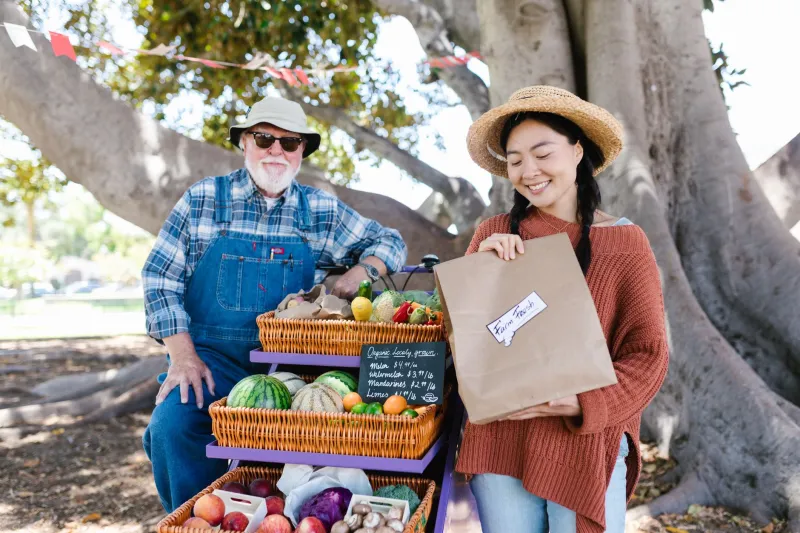
Walk through any decent farmers market in America on a Saturday morning and you'll spot them: hand-lettered signs that say things like "no sprays," "beyond organic," or "grown naturally." No USDA certified organic seal. No green-and-white logo. Just a farmer, a folding table, and a pretty direct claim about how their food was raised.
These aren't operations cutting corners. Many of them are doing more than what the USDA certification requires. So why aren't they certified?
The answer is complicated — and it says a lot about the real gaps in how America labels and regulates the food we eat.
The Cost of the Label Nobody Talks About
USDA organic certification isn't free. For small farms, the costs can range from a few hundred dollars annually to several thousand, depending on the certifying agency, the size of the operation, and the complexity of what's being grown. There are application fees, annual renewal fees, inspection fees, and in some cases, travel costs for the inspector.
Then there's the paperwork. Organic certification requires meticulous record-keeping — field histories, input logs, seed sourcing documentation, sales records. For a solo farmer or a family operation running on thin margins and long hours, that administrative burden isn't trivial. It's a part-time job layered on top of an already exhausting one.
The USDA does offer a cost-share program through the National Organic Certification Cost Share Program, which can reimburse up to 75% of certification costs (capped at $750 per certification scope). But even with that help, plenty of small growers find the process more trouble than it's worth — especially when they're selling everything they grow directly to customers who already know and trust them.
"My buyers watch me work," one market gardener in Vermont put it bluntly in an interview with a regional food publication. "They've walked my fields. They know my name. What's a piece of paper going to tell them that I haven't already?"
When Philosophy Gets in the Way of a Seal
For some farmers, the objection isn't just financial. It's ideological.
USDA organic certification was codified under the National Organic Program in 2002, and while it set important baseline standards, it also opened the door to large-scale industrial agriculture operating under the organic banner. Today, some of the biggest organic brands in American grocery stores are owned by multinational conglomerates. Certified organic factory farms exist. Certified organic hydroponic operations — where crops grow without soil entirely — are legally permitted to carry the label.
For farmers who believe that truly clean food is inseparable from healthy soil, ecological relationships, and small-scale stewardship, sharing a label with industrial organic operations feels like a contradiction they're not willing to live with.
This is where terms like "beyond organic" or "regenerative" have started filling the vacuum. These aren't legally defined terms — anyone can use them — but for farmers who've built real relationships with their customers, that ambiguity is less of a problem than it sounds.
What "Beyond Organic" Actually Looks Like on the Ground
So what are these uncertified farms actually doing? In many cases, quite a lot.
Some practice full regenerative agriculture — cover cropping, composting, rotational grazing, and soil-building practices that go well beyond what certification requires. Others maintain strict no-spray policies without the formal documentation the USDA demands. Many source open-pollinated or heirloom seeds, avoid synthetic inputs entirely, and operate on a scale where every plant gets individual attention.
The irony is that a certified organic farm is legally permitted to use a list of approved synthetic substances — certain pesticides, certain fertilizers — under the USDA program. A small uncertified farm that uses none of those things has no official way to communicate that distinction to a shopper in a conventional grocery store. The label system simply doesn't have a slot for them.
The Trust Gap — and How Consumers Are Bridging It
Here's the real consumer education piece: the USDA organic seal is a useful shortcut when you're buying something from a brand you've never heard of in a store where you can't ask questions. It signals that a third party has verified certain practices. That's genuinely valuable.
But it was never designed to be the only signal — and treating it like one means missing a whole tier of excellent, clean food grown by people who opted out of the system for legitimate reasons.
So how do you find these farms?
Farmers markets are the obvious starting point. Talk to vendors. Ask directly: do you use any sprays? What's your fertilizer situation? Most small-scale growers are happy to answer, and the ones doing things right will usually be enthusiastic about it.
Community Supported Agriculture (CSA) programs often come with newsletters, farm visits, and direct communication with growers. A CSA relationship essentially replaces the need for a label — you know the farm, the farmer, and the practices.
Local food directories like those run by state departments of agriculture, or platforms like Local Harvest, often let you filter for farms that use organic practices regardless of certification status.
Ask about third-party alternatives. Some farms use Certified Naturally Grown (CNG), a peer-review certification system designed specifically for small direct-market farms. It's not the USDA seal, but it's a legitimate third-party verification that many uncertified-but-organic farmers prefer because it's built for operations like theirs.
What This Tells Us About the Food System
The existence of a growing cohort of farms that practice organic methods while rejecting organic certification isn't just an interesting quirk. It's a signal.
It tells us that the certification system, however well-intentioned, was built at a scale and with an administrative logic that doesn't fit everyone growing clean food in this country. It tells us that the organic label — while still meaningful — doesn't capture the full picture of what's available to American consumers who care about how their food is grown.
And it tells us that trust, built through transparency and direct relationships, is doing real work that labels alone can't do.
At Jasper Organics, we've always believed that knowing your food means knowing where it comes from. Sometimes that knowledge comes with a certified seal. Sometimes it comes from a conversation at a farm stand with someone who can tell you exactly what went into the ground — and exactly what didn't.
Both of those paths lead somewhere worth going. The trick is knowing how to walk them.