Beyond the Harvest: How Regenerative Farmers Are Cashing In on What the Land Does Between Crops
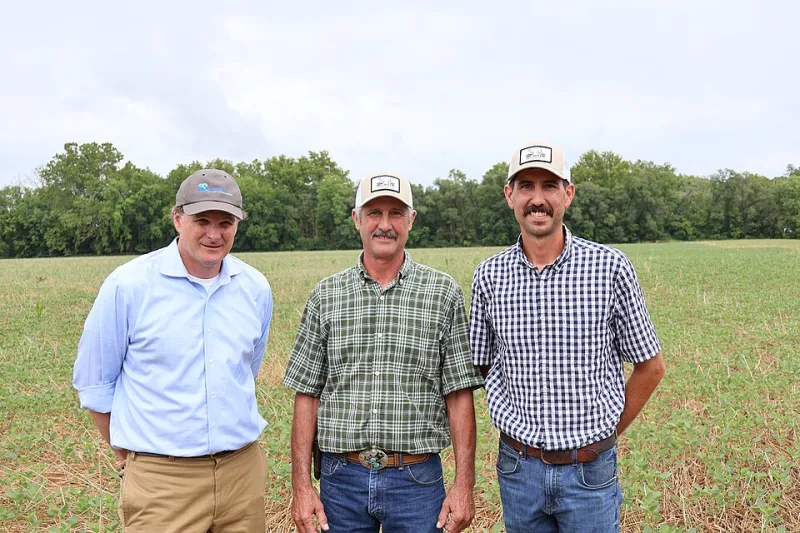
Photo: USDAgov, Public domain, via Wikimedia Commons
For most of American agricultural history, a farm's value was pretty simple to calculate: how many bushels per acre, how many pounds per season, how much the market would pay on any given Tuesday. That was the whole equation. Everything else — the water the soil held after a rainstorm, the carbon pulled out of the atmosphere by cover crops, the biodiversity humming through a field of clover — was essentially invisible on the balance sheet.
That math is starting to change. And for small regenerative organic farms, it might be the most important shift in decades.
The Problem That Crop Sales Alone Can't Solve
Let's be honest about something: the economics of small-scale organic farming are brutal. Margins are thin. Certification costs are real. Weather is unpredictable. And competing against industrial-scale operations — even in the organic space — means constantly doing more with less.
According to USDA data, small farms (those generating under $350,000 in annual revenue) account for roughly 90 percent of all US farms but bring in only about 26 percent of total farm sales. The romantic vision of the independent, sustainable farmer is colliding hard with the financial reality of actually staying afloat.
That's the context for understanding why carbon markets and ecosystem service payments have become such a big conversation in regenerative agriculture circles. Because if farmers can get paid not just for what they grow but for what their land does, the entire economic model shifts.
What Carbon Credits Actually Mean on a Working Farm
Here's the basic idea: regenerative farming practices — cover cropping, reduced tillage, composting, rotational grazing — pull carbon dioxide out of the atmosphere and lock it into the soil. That sequestered carbon has value in voluntary carbon markets, where corporations and other entities purchase credits to offset their own emissions.
Programs like Indigo Ag's Terraton Initiative, Nori, and the Soil Carbon Initiative have been building out platforms specifically designed to connect regenerative farmers with carbon credit buyers. The going rate fluctuates, but farmers participating in these markets have reported earning anywhere from $15 to $45 per metric ton of carbon sequestered — on top of whatever they make from selling crops.
For a mid-sized operation sequestering 50 to 100 tons of carbon annually, that's potentially thousands of additional dollars per year flowing in from sources that have nothing to do with whether the farmers market was busy on Saturday.
But it's not just carbon. Water retention, reduced runoff, and improved watershed health are also being quantified and monetized through emerging "payment for ecosystem services" (PES) frameworks. In drought-stressed regions like California's Central Valley or the Colorado River Basin, farms that demonstrably hold more water in their soil are increasingly valuable to downstream communities — and some water authorities are beginning to pay for that service directly.
The Measurement Problem (And Why It's Getting Solved)
Skeptics — and there are legitimate ones — have long pointed out that measuring soil carbon is complicated. Unlike solar energy, you can't just read a meter. Soil carbon levels vary by depth, by season, by field section. Early carbon credit programs were criticized for relying too heavily on modeled estimates rather than actual soil sampling, which opened the door to overclaiming and, in some cases, outright fraud.
That's a fair critique. But the science is catching up fast.
New remote sensing tools, satellite-based monitoring, and advances in soil spectroscopy are making it possible to verify carbon sequestration with much greater accuracy and at lower cost. Organizations like the Savory Institute and the Rodale Institute have been developing rigorous measurement protocols specifically for regenerative systems. And the USDA's own Natural Resources Conservation Service (NRCS) has been piloting soil health measurement frameworks that could eventually tie federal conservation payments to verified outcomes rather than just practice adoption.
The infrastructure is being built. It's not perfect yet, but it's getting there.
Stacking Payments: The New Farm Revenue Model
What's particularly exciting — and genuinely new — is the concept of "stacking" multiple income streams from the same land. A regenerative organic farmer might simultaneously earn:
- Crop revenue from direct sales, farmers markets, or CSA subscriptions
- Carbon credits through a voluntary market program
- Conservation payments through USDA programs like EQIP or CSP
- Water quality incentives from state or regional watershed programs
- Biodiversity premiums through emerging habitat certification schemes
None of these individually solves the small farm income problem. But layered together, they start to look like a genuinely different economic model — one where the farm is compensated for the full range of value it produces, not just the stuff that shows up in a grocery bag.
Farms affiliated with the Regenerative Organic Certified (ROC) standard, developed by the Rodale Institute in partnership with Dr. Bronner's and Patagonia Provisions, are already exploring how that certification can open doors to premium markets and, increasingly, to ecosystem payment programs that require verified regenerative practices as a prerequisite.
Who Benefits — and Who Gets Left Out
It's worth asking the harder question here: do these new revenue streams actually reach the farmers who need them most?
Right now, the answer is mixed. Many carbon market programs have minimum acreage requirements or upfront enrollment costs that effectively exclude very small operations. The administrative burden of documentation, soil sampling, and third-party verification can be significant. And historically, federal conservation programs have skewed toward larger, more established farms that have the resources to navigate complex application processes.
Farm advocacy groups like the National Sustainable Agriculture Coalition have been pushing hard for program designs that prioritize equity — making sure that BIPOC farmers, beginning farmers, and small-acreage producers aren't systematically shut out of the new carbon economy the same way they've been shut out of so many other agricultural support systems.
This is a real tension, and it doesn't have an easy answer. But the conversation is happening, which is more than could be said five years ago.
What This Means for the Food You Buy
If you're shopping at a farmers market, buying a CSA share, or choosing a regenerative organic label at the grocery store, this stuff isn't abstract. The farmers growing your food are navigating these questions right now. Whether they can access carbon markets, ecosystem payments, and stacked revenue streams will directly affect whether they're still farming in ten years.
At Jasper Organics, we think the relationship between eater and farmer runs deeper than a transaction. When you choose food grown through regenerative practices, you're supporting a system that does more than feed people — it rebuilds soil, holds water, sequesters carbon, and keeps small farms economically viable in a world that makes that harder every year.
The land gives. And increasingly, the market — imperfect as it is — is starting to give something back.