Less Yield, More Money: The Counterintuitive Math Behind Regenerative Farming's Quiet Boom

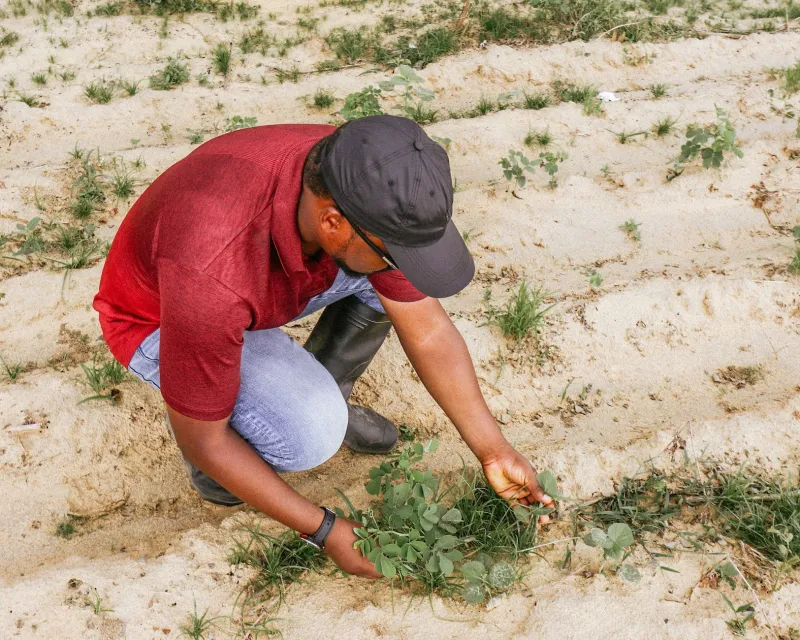
Photo: Brian Godette, Public domain, via Wikimedia Commons
For most of the twentieth century, American agriculture ran on one metric: bushels per acre. More was always better. More inputs, more tillage, more chemical intervention — whatever it took to push that number higher. Farmers who didn't play the yield game were quietly written off as hobbyists or idealists.
So it's more than a little ironic that some of the most financially resilient farms in the country right now are the ones that stopped chasing yield entirely.
This isn't a feel-good story about farmers choosing principles over profits. It's actually a story about money — specifically, about how regenerative organic agriculture is quietly assembling a business model that conventional farming can't easily replicate.
The Yield Trap Nobody Talks About
Here's the part that gets glossed over in most conversations about modern agriculture: high yields and high profits are not the same thing. For commodity farmers — the ones growing corn, soy, and wheat at industrial scale — margins have been razor-thin for decades. Input costs eat into revenue. Debt loads are staggering. The only way to survive is to grow bigger, which means more debt, which means more pressure to maximize yield at any cost.
It's a treadmill. And a lot of farmers are exhausted.
What regenerative farmers figured out — sometimes by accident, sometimes by necessity — is that the treadmill has an off switch. When you stop pouring money into synthetic fertilizers, herbicides, and aggressive tillage, your input costs drop dramatically. Your soil starts doing work that you used to pay for. And suddenly, even with lower yields, you're keeping more of what you earn.
Brad Stufflebeam, who farms outside Austin, Texas, made the shift to regenerative practices over a decade ago. He'll tell you plainly that his per-acre yields on certain crops are lower than his conventional neighbors. He'll also tell you his farm is profitable in ways theirs aren't, because he's selling direct to consumers and restaurants at prices that reflect actual quality — not commodity market prices set by Chicago traders.
The Premium Direct-to-Consumer Shift
One of the biggest financial levers in regenerative farming isn't soil carbon or biodiversity credits — it's cutting out the middleman. When farmers invest in soil health, they tend to produce food that tastes noticeably different. More complex. More alive. The kind of carrot or tomato that makes people actually stop and comment on it.
That sensory difference is a sales tool. And farmers who've built direct relationships with customers — through CSA subscriptions, farmers markets, farm-to-chef partnerships, or their own online storefronts — are capturing margins that would otherwise disappear into distributor and retailer markups.
White Oak Pastures in Bluffton, Georgia is a frequently cited example. Will Harris spent years transitioning his cattle operation from conventional to fully regenerative, and the farm now sells directly to consumers through its own e-commerce platform. The premium pricing isn't just justified by the "regenerative" label — it's backed by measurable soil health data and a story customers can actually connect with. That story commands a price point that commodity beef never could.
This is showing up across farm types and regions. Small vegetable operations in the Pacific Northwest. Grain farms in the Midwest experimenting with heritage varieties. Orchards in New England building loyal subscriber bases around seasonal boxes. The common thread is that soil investment translates to product quality, and product quality translates to customer loyalty and pricing power.
Carbon Credits and Ecosystem Payments: From Niche to Legitimate Revenue
For a while, carbon credit programs felt like a distant, complicated promise — something regulators and tech companies talked about but farmers couldn't actually access. That's changing.
Platforms like Indigo Ag, Nori, and Regen Network are creating real pathways for farmers to get paid for sequestering carbon in their soil. The mechanics vary, but the basic idea is straightforward: if you can demonstrate that your farming practices are pulling carbon dioxide out of the atmosphere and locking it into the ground, corporations looking to offset their emissions will pay you for that service.
The numbers aren't life-changing on their own — payments typically range from $15 to $50 per metric ton of carbon sequestered, and most farms are sequestering somewhere between half a ton and a few tons per acre annually. But as a supplemental revenue stream layered on top of direct sales and reduced input costs, it starts to add up meaningfully. And the market is still young. As corporate carbon commitments intensify and voluntary carbon markets mature, prices are expected to rise.
Beyond carbon, there's growing interest in broader ecosystem service payments — programs that compensate farmers for maintaining wetlands, supporting pollinator habitat, improving water quality, or preserving biodiversity. The USDA's Conservation Reserve Program has existed for decades, but newer state-level initiatives and private conservation finance tools are expanding the options. Farmers who've invested in biodiversity — through cover cropping, hedgerows, reduced pesticide use, and rotational grazing — are increasingly positioned to monetize that investment in ways that weren't available five years ago.
The Soil Health ROI Nobody Modeled
Conventional agricultural economics has always been pretty good at calculating the return on a new piece of equipment or a different seed variety. It's been lousy at accounting for soil health — partly because the benefits are diffuse and long-term, and partly because healthy soil was never treated as something you could build or deplete. It was just... there.
That framing is shifting. Farmers and researchers are increasingly documenting the financial value of improved soil biology — reduced irrigation needs as water retention improves, lower fertilizer costs as nutrient cycling becomes more efficient, reduced crop losses from disease and pest pressure as ecosystem balance is restored. These aren't abstract environmental benefits. They're line items.
A 2022 study from the Rodale Institute found that regenerative organic systems could match or exceed the profitability of conventional systems within a relatively short transition period — even without premium pricing — simply through input cost reduction. Add the premium pricing and the emerging ecosystem payments, and the financial case gets considerably stronger.
Not a Silver Bullet, But a Real Shift
It would be dishonest to pretend regenerative farming is easy or that the economics work perfectly for everyone. The transition period is genuinely hard. Yields often dip before they stabilize. Learning new systems takes time. Access to markets that pay premium prices isn't equally distributed — farmers near major metro areas have advantages that rural operators don't.
And carbon markets, for all their promise, are still figuring out verification standards and long-term price stability. Ecosystem service payments remain inconsistent and geographically uneven.
But the direction of travel is clear. The farmers who bet on soil health and diversified their revenue beyond commodity sales are the ones who look financially stable right now. They're not dependent on a single crop price. They're not drowning in input costs. They've built businesses with multiple revenue streams, loyal customers, and assets — specifically, living soil — that actually appreciate over time rather than degrade.
That's not idealism. That's a business model. And it's one that's starting to make a lot of conventional farmers take a second look at the treadmill they've been running on.
The land has been trying to tell us something for a long time. The farmers who listened are, increasingly, the ones laughing all the way to the bank.