Grow Big or Go Home: The Impossible Choice Facing America's Best Small Organic Farms
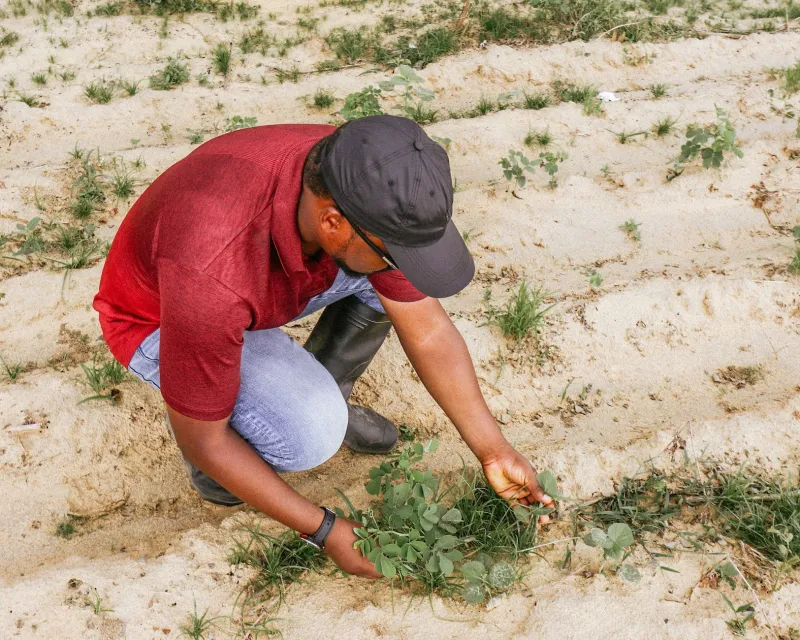
Somewhere in the Willamette Valley, a farmer named Deb is standing in a field of the most gorgeous lacinato kale you've ever seen. Her soil health scores are off the charts. Her CSA waitlist is three years long. Her Instagram following would make a lifestyle brand jealous. And she is, by her own admission, one bad season away from walking away from all of it.
"People think I've made it," she says, squinting into the afternoon sun. "But making it and being sustainable are two completely different things."
This is the quiet crisis running underneath the farm-to-table movement — the one nobody wants to talk about at the farmers market while they're paying $6 for a bunch of radishes. The farms we champion most fiercely are often the ones structurally set up to fail. And the moment they try to grow, they face a gauntlet that almost always ends in one of two outcomes: stay small and stay broke, or scale up and stop being what made them worth saving in the first place.
The Certification Trap
Let's start with the cost of being official. USDA Organic certification isn't free — it runs anywhere from a few hundred to several thousand dollars annually depending on the certifying agency, farm size, and state. For a small operation already running on razor-thin margins, that's not a rounding error. It's a line item that can determine whether a farm survives a drought year.
There's a federal cost-share program that helps offset some of that expense, but the reimbursement process is slow, the paperwork is extensive, and plenty of small farmers either don't know it exists or don't have the administrative bandwidth to pursue it. Meanwhile, the farms that can absorb certification costs easily? Those are the mid-size and large operations increasingly dominating the organic shelf space at Whole Foods and Kroger alike.
The cruel irony is that many of the most ecologically responsible farms in the country are farming organically without the label — because they simply can't afford to prove it.
Distribution: The Wall You Can't Climb Alone
Say Deb's kale is exceptional. Say she wants to reach more people. The next logical step is getting into a regional grocery chain or partnering with a food hub. Simple, right?
Not remotely.
Grocery buyers want volume consistency, year-round availability, standardized packaging, and liability insurance that most small farms can't maintain. Food distributors — even the ones who talk a big game about supporting local — need a minimum order threshold that a 10-acre operation simply can't reliably hit. And then there's the payment timeline: net-30 or net-60 terms mean a small farm might deliver $8,000 worth of produce in April and not see a check until June. That's a cash flow problem that can spiral fast.
Some farmers have found workarounds through regional food co-ops and direct-to-consumer models like CSAs and online farm stores. Those channels work — but they also cap your ceiling. You can only serve so many families with a weekly box before you've maxed out the model without significantly more land, labor, and infrastructure.
The Consolidation Squeeze
Here's where it gets politically uncomfortable: organic farming is getting consolidated in the same way conventional agriculture did decades ago. Large agribusiness players have figured out that "organic" is a premium-margin category worth owning, and they've been buying up mid-size organic operations — or simply outcompeting them into closure — for years.
The USDA's own data shows that while the number of certified organic farms has grown, so has the concentration of organic sales among larger operations. The top tier of organic producers is capturing an increasingly disproportionate share of the market. Small farms aren't growing alongside the organic sector — they're getting squeezed out of it.
For a farmer trying to scale ethically, this creates an almost impossible competitive environment. You're not just competing with conventional agriculture. You're competing with large organic operations that have the infrastructure, the capital access, and the retail relationships you've spent a decade trying to build.
When "Growth" Means Compromise
Some farmers have tried to thread the needle — bringing on investors, signing distribution deals, expanding acreage. A few have managed to do it without gutting their values. Many more have found that growth introduces pressures that gradually reshape the farm into something unrecognizable.
Take labor. Scaling up almost always means hiring more workers. Organic farming is labor-intensive by nature, and fair wages are non-negotiable for most mission-driven farmers. But the math gets brutal fast. If you're paying living wages, providing housing, and maintaining organic certification across a significantly larger operation, your price point has to rise — which narrows your market to higher-income consumers and undermines any claim to feeding a broad population equitably.
Or take the distribution deal. Accept terms with a regional distributor and you might finally get your products in front of 50,000 new customers. You might also find yourself locked into volume commitments that push you toward monoculture cropping, away from the crop rotation that made your soil so healthy in the first place.
"Every time I've thought about getting bigger, I've had to ask myself what I'd have to give up to do it," says Marcus, who runs a mixed-vegetable and pasture operation in central Virginia. "And every time, the answer was something I wasn't willing to lose."
Is the Model Broken, or Just Underfunded?
There's a school of thought that says the farm-to-table model isn't broken — it's just been left to operate without the structural support it needs. Countries like Denmark and Austria have built national food policy frameworks that subsidize small organic operations, invest in shared distribution infrastructure, and treat local food systems as public goods rather than private ventures.
The United States has moved in that direction incrementally — the Farm Bill includes programs that benefit small and organic producers — but the overall architecture still heavily favors scale. Commodity crop subsidies dwarf support for diversified small farms. Research funding flows disproportionately toward industrial agriculture. And the regulatory environment, while not hostile to small farms, was never really designed with them in mind.
Advocates argue that what's needed isn't just more money, but a fundamental rethinking of how the food system values small-scale, ecologically responsible production. That means better cost-share programs, regional food infrastructure investment, fair contract protections for small producers, and procurement policies that prioritize local organic farms for school lunch programs and government food purchasing.
What You Can Actually Do
None of this means your farmers market habit is futile. Direct spending with small farms is still one of the most meaningful things a food-conscious consumer can do — it keeps money in the right hands and signals real market demand.
But it's also worth pushing the conversation beyond your shopping bag. Support food policy organizations working on Farm Bill reform. Back local initiatives that fund food hub infrastructure. Ask your grocery store where its organic produce actually comes from. And when your favorite small farmer launches a CSA or asks for a deposit to hold your share through the season, say yes — that upfront cash flow matters more than most customers realize.
The farms worth saving aren't going to be saved by Instagram engagement alone. They need a food system that's built to let them survive — and right now, that system is still very much under construction.