Vanishing from the Vine: The Quiet Crisis of Heirloom Seeds and the Farmers Fighting to Save Them
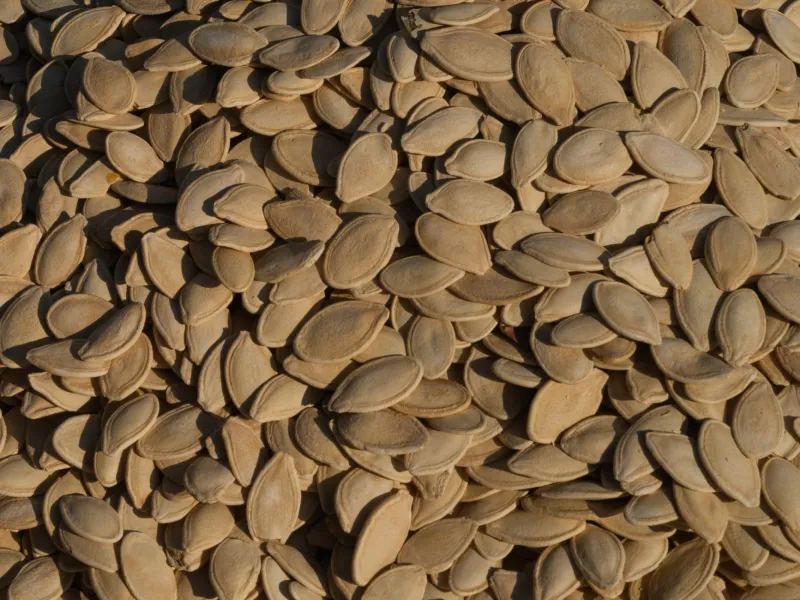
Somewhere in a temperature-controlled room at a seed library in Tucson, Arizona, there are envelopes. Hundreds of them. Each one holds a tiny handful of seeds — Dragon Tongue beans, Mortgage Lifter tomatoes, Jimmy Nardello peppers — varieties that have passed through human hands for decades, sometimes centuries. Volunteers have labeled each envelope by hand. The whole operation runs on donations and sheer stubbornness.
This is what seed preservation looks like in America right now: urgent, underfunded, and deeply personal.
While shoppers at farmers markets swoon over purple Cherokee tomatoes and striped Chioggia beets, the commercial farming industry has been quietly moving in the opposite direction. Over the last fifty years, an estimated 90 percent of the fruit and vegetable varieties that existed in the early 1900s have vanished from commercial production. That's not a typo. Nine out of ten.
How We Got Here: The Economics of Uniformity
To understand why heirloom seeds have been pushed to the margins, you have to understand what commercial agriculture actually optimizes for — and it isn't flavor or diversity.
Patented hybrid seeds, developed and sold by a handful of massive agribusiness companies, are engineered for specific, measurable traits: uniform size, resistance to mechanical harvesting, long shelf life, and the ability to survive cross-country shipping without bruising. These are genuinely useful qualities if you're running a 5,000-acre operation and selling to a national grocery chain. But they come at a cost.
Hybrid seeds can't be saved. Plant a hybrid tomato, harvest its seeds, and what you grow next season will be unpredictable — often inferior. That's not an accident. It's a business model. Farmers who plant hybrids have to buy new seeds every single year, creating a reliable revenue stream for seed companies and a recurring expense for growers.
Heirloom seeds work differently. They're open-pollinated, which means a farmer can harvest seeds from the best plants at the end of the season and replant them the following year. Over generations, those seeds adapt to local soil and climate conditions. They become, in a very real sense, a living record of a specific place. That's exactly what makes them valuable — and exactly what makes them economically inconvenient for companies that profit from dependency.
"The seed industry consolidation over the last thirty years has been staggering," says one small-scale grain farmer in western Vermont who has been growing heirloom wheat varieties for over a decade. "When four companies control most of the commercial seed supply, the incentive to maintain diversity just isn't there. Diversity is expensive. Monoculture is efficient."
The Seed Libraries Holding the Line
Across the country, a patchwork of seed libraries, nonprofits, and small farms has stepped into the gap that industrial agriculture left behind. Organizations like Native Seeds/SEARCH in the Southwest, Seed Savers Exchange in Iowa, and dozens of regional seed libraries embedded in public libraries and community gardens are doing the slow, painstaking work of keeping rare varieties alive.
The model is elegantly simple: borrow seeds, grow them out, save seeds from your best plants, and return them at the end of the season. It's a lending library for living genetic material. Some collections focus on Indigenous varieties with deep cultural roots in specific regions. Others concentrate on vegetables that were once staples of immigrant communities — Italian frying peppers, Armenian cucumbers, German heirloom potatoes — flavors that crossed an ocean and nearly got lost in the shuffle of assimilation and industrialization.
Maria Reyes, who manages a community seed library in the Rio Grande Valley of Texas, describes her work as "culinary archaeology." "A lot of these seeds came from grandmothers who brought them in their pockets," she says. "When a variety disappears, it's not just a plant we lose. It's a story. It's a food culture. It's a connection to land that somebody's family farmed for generations."
Why It Matters Beyond Nostalgia
Here's where the conversation moves past sentiment and into something more urgent.
Genetic diversity in our food supply isn't just a nice idea — it's a survival strategy. A food system built on a narrow base of genetically similar crops is dangerously vulnerable to disease, climate shifts, and new pests. The Irish Potato Famine wasn't just a tragedy of poverty and politics; it was a catastrophic failure of monoculture. When a single blight hit a population of nearly identical potatoes, there was nothing to fall back on.
Heirloom varieties, by contrast, carry a wealth of genetic variation that plant breeders and farmers may desperately need as climate change reshapes growing conditions across the US. Some old varieties tolerate drought better than modern hybrids. Others resist diseases that are becoming more common as temperatures rise. That genetic information, once lost, cannot be recreated.
"We're banking seeds today that might save a harvest twenty years from now," says one plant breeder working with a university extension program in the Pacific Northwest. "The irony is that we're losing them fastest right when we need that diversity most."
What You Can Actually Do About It
This is the part where we stop making you feel bad and start giving you something useful.
The good news is that consumer choices genuinely move the needle here, maybe more than in almost any other corner of the food system. When you spend money on heirloom produce — whether at a farmers market, through a CSA subscription, or from a grocery store that sources from small farms — you're directly funding the farmers who grow these varieties. And farmers grow what pays.
Buy heirloom produce with intention. Look for variety names on signage at farmers markets. Ask vendors what they're growing and where the seeds came from. That conversation matters — it signals demand, and it builds relationships between eaters and growers.
Join or donate to a seed library. Many are run on shoestring budgets by volunteers. A small donation can fund seed storage supplies, postage for seed exchanges, or outreach programs that get seeds into the hands of new growers. Native Seeds/SEARCH, Seed Savers Exchange, and your local public library's seed lending program are all worth looking up.
Try growing something unusual yourself. Even a container of Lemon Boy tomatoes on a balcony or a pot of Dragon Tongue beans on a patio counts. Seed companies that specialize in heirloom and open-pollinated varieties — look for small, independent sellers rather than big-box garden centers — need your business.
Support farms that save seeds. When you shop with small organic farms, ask whether they save their own seeds or source from independent seed companies. Farms that invest in seed saving are doing conservation work alongside food production, and that deserves recognition.
The Long Game
At Jasper Organics, we talk a lot about what's in your food and how it was grown. But the story starts earlier than the field — it starts with the seed. The choice of what to plant is a choice about what kind of food system we want, what flavors we're willing to fight for, and whose agricultural knowledge we think is worth preserving.
The seed catalogs that nobody talks about — the hand-labeled envelopes in Tucson, the dog-eared notebooks of a Vermont grain farmer, the carefully tended plots of a Rio Grande Valley seed library — these are the quiet infrastructure of food resilience. They're running on passion and community support, and they need more of both.
The good news? You're already part of this. Every time you choose a Brandywine over a beefsteak, every time you ask your CSA farmer what variety of squash they planted this year, every time you drop a few seeds back at the library after a season of growing — you're voting for a food system with more variety, more history, and a lot more flavor.
That's a vote worth casting.