Shipped From Where? The Dirty Secret Behind Organic Fertilizer and the Farmers Fixing It
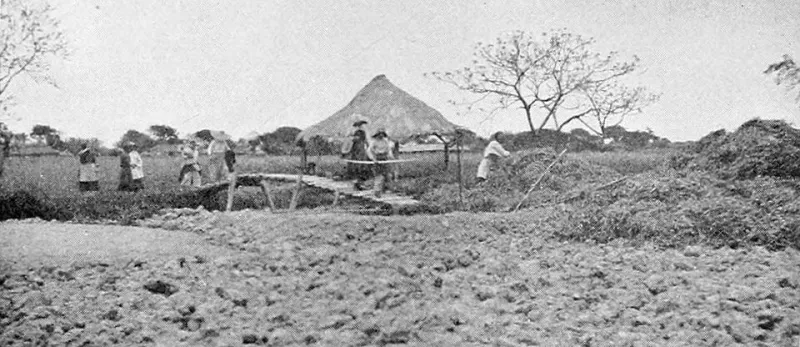
Photo: Unknown photographerUnknown photographer, Public domain, via Wikimedia Commons
Here's a question worth sitting with the next time you grab a bag of organic salad greens: where did the fertilizer that grew those greens actually come from?
For a lot of American consumers, "organic" conjures images of a farmer hand-spreading compost from a nearby pile, nourishing the earth in some kind of beautiful, closed-circle relationship. And sometimes that's exactly what's happening. But more often than you'd think, the nutrients feeding your certified organic produce traveled a very long way to get there—sometimes from Chile, Peru, or even Southeast Asia.
That's not a conspiracy. It's just how the market developed. And a growing number of farmers are now asking whether it's time to rethink the whole thing from the ground up.
The Import Problem Nobody Talks About
Organic certification in the United States prohibits synthetic fertilizers, but it doesn't restrict where approved amendments come from. That means farms can—and do—legally source things like bone meal, blood meal, feather meal, kelp, and fish emulsion from suppliers operating anywhere on the planet.
Seabird guano, for instance, has been a popular organic nitrogen source for decades. The largest deposits are concentrated along the coasts of Peru and Chile. Bags of it regularly make their way into the U.S. market, loaded onto container ships and trucked to distribution centers before finally reaching a farm in, say, Vermont or Oregon. By the time it hits the soil, that "natural" fertilizer has racked up a carbon footprint that would make a lot of eco-minded growers uncomfortable.
It's not just guano. Chilean nitrate, a naturally occurring mineral fertilizer, was once one of the most widely used organic amendments in American agriculture. The USDA's National Organic Program eventually restricted it due to concerns about overuse, but the broader pattern—organic farms leaning hard on imported inputs—never really went away. If anything, it deepened as organic acreage expanded and domestic supply couldn't keep pace with demand.
"The certification says what you can't use," says one Midwest grain farmer who asked to remain anonymous. "It doesn't say much about where your inputs come from or how far they traveled. That gap is real, and a lot of us have been quietly uncomfortable with it for a while."
Closed-Loop Thinking Is Having a Moment
The good news is that discomfort is turning into action. Across the country, a new generation of farmers—and some pretty seasoned veterans too—are building what they call closed-loop nutrient systems: farm designs where as much fertility as possible is generated and recycled on-site, or at least sourced within the immediate region.
The concept isn't new. Traditional farming operated this way by default for centuries. Animals grazed, manured the land, crops grew, residues were composted, and the cycle continued. Industrial agriculture broke that loop in the 20th century by making cheap synthetic nitrogen available at scale. Organic farming rejected synthetic inputs, but in many cases it just substituted one kind of external dependency for another.
What's different now is the intentionality. Farmers building closed-loop systems aren't just avoiding synthetics—they're actively designing their operations to produce fertility internally. That means integrating livestock with crop production, investing in on-farm composting infrastructure, experimenting with cover crop cocktails that fix nitrogen from the atmosphere, and in some cases, partnering with neighboring farms or food businesses to capture nutrient streams that would otherwise go to waste.
The Innovators Getting Creative
In the mid-Atlantic region, a handful of vegetable operations have started working directly with local restaurants and food processors to collect organic waste for composting. Instead of buying bagged amendments from a distributor, they're building fertility out of coffee grounds, vegetable scraps, and brewery spent grain—materials that would otherwise end up in a landfill. The logistics take work, but the payoff is a high-quality, hyper-local compost that costs a fraction of what imported amendments run.
Out in the Pacific Northwest, some farmers are leaning into biochar—a carbon-rich material made by burning agricultural waste in low-oxygen conditions—as both a soil amendment and a long-term carbon sink. When inoculated with compost or compost tea, biochar can dramatically improve soil's ability to hold nutrients, reducing the total amount of fertilizer needed in the first place. Several small producers in Washington and Oregon are now making their own biochar from orchard prunings and other on-farm wood waste.
Then there's the cover crop revolution quietly happening across the Corn Belt. Farmers are moving beyond simple winter rye or clover covers and experimenting with complex multi-species mixes—sometimes eight to twelve different plants in a single blend—designed to fix nitrogen, break up compaction, suppress weeds, and feed soil biology all at once. Done right, a well-managed cover crop system can meaningfully reduce a farm's dependence on purchased fertility year after year.
The Carbon Math Is Complicated
It's worth being honest about the tradeoffs here. Closing nutrient loops takes time, capital, and a willingness to experiment. Not every farm has the land base to support a meaningful livestock component. Not every region has the food-waste infrastructure to support local composting partnerships. And some crops genuinely have high nutrient demands that are hard to meet without some level of external input, at least in the short term.
There's also a legitimate argument that the carbon cost of imported fertilizers, while real, is relatively modest compared to other parts of the food system—transportation of the final product, refrigeration, processing, and so on. Focusing only on fertilizer inputs can obscure the bigger picture.
But that argument cuts both ways. If the carbon cost of shipped fertilizer is relatively small, then the symbolic and systemic benefits of eliminating it might outweigh the modest savings. Farms that build genuine nutrient self-sufficiency tend to be more resilient, more financially stable, and more deeply connected to their local ecosystems. Those things matter beyond the carbon spreadsheet.
What You Can Actually Do With This Information
As a consumer, you're not going to find "locally sourced fertilizer" on a product label anytime soon. But you can start asking better questions—at farmers markets, through CSA sign-ups, or when buying directly from farms online.
Ask farmers how they build soil fertility. Ask whether they use purchased amendments and where those come from. You don't need to make anyone feel defensive about it—the whole industry is grappling with this—but showing that you care about the full picture sends a signal that matters.
Supporting farms that are actively working toward closed-loop systems, even imperfectly, is one of the most meaningful things a food-conscious consumer can do right now. Because the future of organic agriculture isn't just about what isn't in your food. It's about building something genuinely regenerative—from the soil up, and as close to home as possible.

