Organic Doesn't Always Mean Low-Impact: The Climate Math Behind Your Food Choices
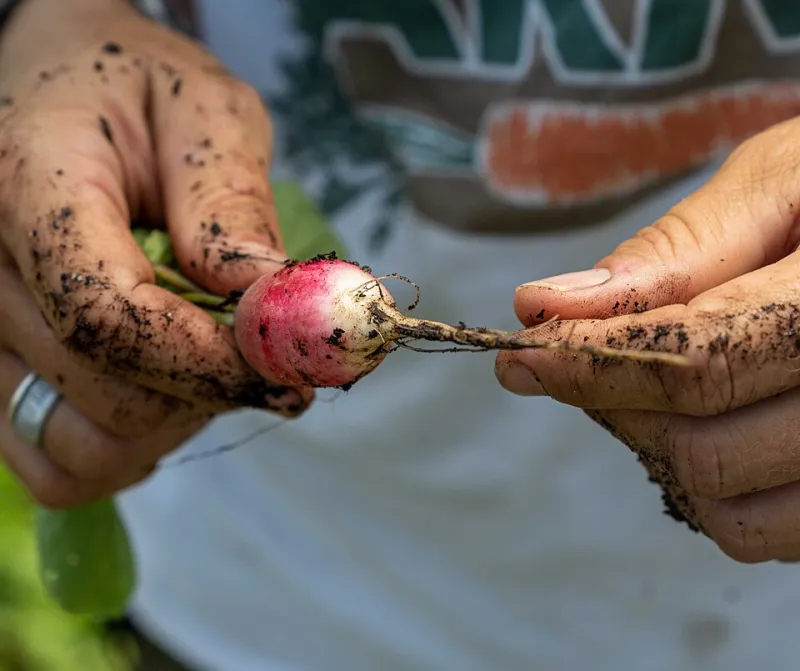
Photo: USDAgov, Public domain, via Wikimedia Commons
There's a quiet assumption baked into every trip to the organic section: that the extra dollar or two you're spending is also buying a better deal for the planet. And honestly, that assumption makes a lot of sense on the surface. No synthetic pesticides. No petroleum-based fertilizers. Farming practices that, at their best, build soil instead of stripping it. The story writes itself.
Except the story has some chapters nobody's putting on the label.
The carbon footprint of your food isn't just about what happens in the field. It's about how far that food traveled to reach you, what it was wrapped in when it got there, how the farm was managed, and whether the yields were high enough to justify the land and energy that went into growing it. When you run those numbers honestly, some organic operations come out looking a lot less green than their certification implies — and some conventional farms, particularly local ones, end up beating them on emissions.
That's not a reason to abandon organic. It's a reason to think harder.
The Miles Problem Nobody Talks About
Here's a scenario that plays out every single day in American grocery stores: a certified organic bunch of spinach, grown in California's Central Valley or Arizona's Yuma County, gets loaded onto a refrigerated truck and driven two thousand miles to a supermarket in Ohio or Georgia. Meanwhile, a conventional farm forty miles outside that same Ohio city is growing spinach without any refrigerated long-haul shipping at all.
The organic spinach wins on pesticide exposure. The local conventional spinach wins on transportation emissions — and it's not even close. Refrigerated freight is one of the more carbon-intensive ways to move food, and when you're doing it across half the country, those emissions add up fast.
This isn't a niche edge case. The U.S. food system moves organic produce enormous distances as a matter of routine. The organic market has scaled up dramatically over the past two decades, but the infrastructure — local and regional organic farms supplying local and regional markets — hasn't kept pace with demand everywhere. So the gap gets filled by long-distance supply chains.
Packaging: The Organic Aisle's Dirty Secret
Walk through the organic section of most major grocery chains and notice something: a lot of it comes wrapped in plastic. Individual organic cucumbers in shrink wrap. Organic baby carrots in sealed plastic bags. Organic salad greens in clamshell containers made from materials that, certified compostable claims aside, often end up in landfills anyway.
Conventional produce sections, ironically, often feature more loose, unwrapped items — simply because the conventional supply chain has been optimized for bulk volume over a longer period of time.
Packaging emissions are a real and underappreciated part of the food carbon equation. The production of plastic packaging is fossil-fuel-dependent. When that packaging isn't properly recycled or composted — which is the outcome for the majority of food packaging in the U.S. — it adds to the waste stream without any offset. An organic salad mix sealed in a petroleum-derived plastic container has a packaging footprint that can meaningfully complicate its overall environmental math.
Yield Gaps and Land Use: The Uncomfortable Tradeoff
This one's a little more technical, but it matters. Organic farming, by design, tends to produce lower yields per acre than conventional farming using synthetic inputs. The gap varies a lot by crop and by how skilled the farmer is, but across many staple crops, organic yields run somewhere between 20 and 25 percent lower on average.
Lower yields mean more land is needed to produce the same amount of food. And land use — particularly when forests or grasslands are converted to farmland to meet that demand — is one of the biggest drivers of agricultural greenhouse gas emissions globally. This is sometimes called the "land sparing" argument, and it's a genuine tension that organic advocates and researchers are still working through.
None of this means conventional farming wins the climate argument overall. Synthetic fertilizer production is enormously energy-intensive and generates significant nitrous oxide emissions. Conventional tillage practices have historically devastated soil carbon stocks. The comparison is genuinely complicated, and researchers who study agricultural emissions will tell you that context — crop type, region, farm management — matters enormously.
But the yield gap is real, and pretending it doesn't exist doesn't help anyone make better choices.
What Actually Moves the Needle
So what does a genuinely climate-conscious food choice look like? A few things tend to matter more than the organic label alone.
Distance. Buying from a local or regional farm — organic or not — almost always beats buying organic produce shipped cross-country. Farmers markets, community-supported agriculture (CSA) subscriptions, and regional food hubs are all ways to close that gap. If you can find a local organic farm, even better. But local conventional beats distant organic on transportation emissions pretty reliably.
Farm practices, not just certification. Organic certification sets a floor, not a ceiling. A certified organic farm using regenerative practices — cover cropping, minimal tillage, composting, diverse rotations — is doing meaningfully more for soil carbon sequestration than an organic farm that's technically compliant but still managing soil in ways that don't build long-term health. Ask your farmers how they manage their land. The answer tells you more than the label does.
Packaging choices. Choosing loose produce over pre-packaged, bringing your own bags, and prioritizing items with minimal or compostable packaging are all ways to reduce the packaging slice of your food's carbon footprint. It adds up.
Reducing meat consumption. This one goes beyond organic vs. conventional, but it's worth saying: the single highest-leverage dietary choice most Americans can make for climate impact is eating less beef and dairy. The emissions from livestock agriculture dwarf the organic vs. conventional debate for most households.
The Label Is a Starting Point, Not the Finish Line
At Jasper Organics, we believe in organic farming. The best organic operations are genuinely better for soil health, biodiversity, water quality, and the long-term resilience of agricultural land. That matters, and it's worth supporting.
But we also believe that informed consumers are more powerful than loyal ones. The organic label was designed to solve a specific problem — preventing the use of synthetic pesticides and fertilizers — and it does that. It wasn't designed to be a complete carbon accounting system, and treating it like one lets the actual complexities off the hook.
The food system that's truly good for the planet is local where possible, organically managed where feasible, minimally packaged, and built on farming practices that treat soil as a living asset rather than a production substrate. That system exists in pieces across the U.S. right now. Your job as a consumer is to connect those pieces — and to ask better questions than the label is set up to answer.